手链与手镯是珠宝柜台里最难伺候的一类货品:它们不像戒指立在托上、项链挂在架上,而是一段柔软的曲线,放平了趴着没有精神,立起来又站不稳。手链手镯陈列的关键,是给这段曲线找到合适的支点——用腕托撑出它的弧度,用挂架吊出它的垂坠感,用托盘摆出它的层次。支点对了,一段软曲线就有了站姿,货品的做工、弧度与质感都看得清清楚楚。
腕托:让手链“站”起来的形状
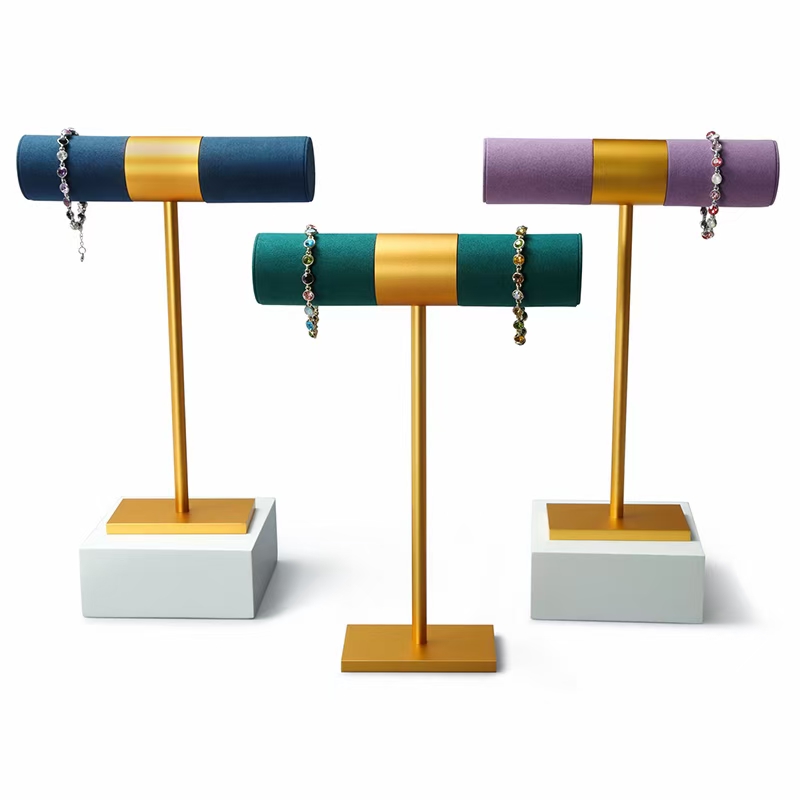
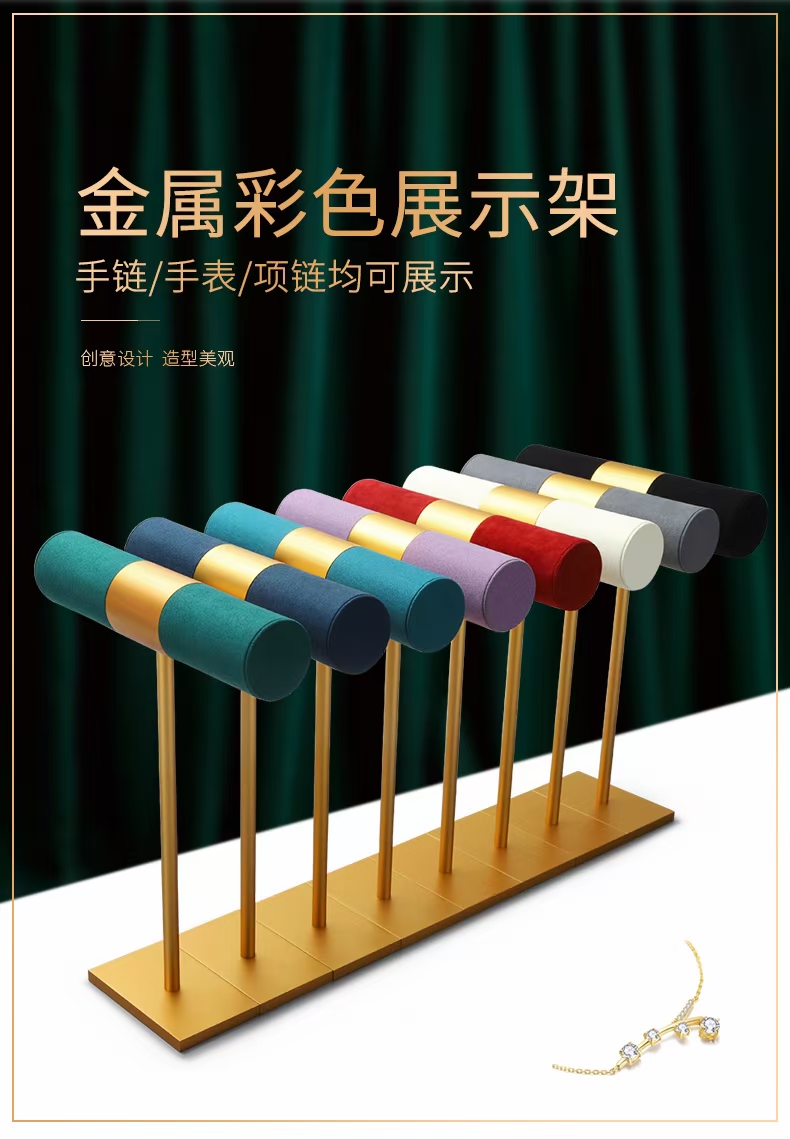
腕托是手链手镯最常用的道具,外形模仿小臂与手腕的曲线,让链子、镯子套上去后保持佩戴时的弧度。选腕托先看尺寸匹配:开口镯、闭口镯、细链、串珠链,腕围和弧度都不一样,腕托太粗,手镯套上去发飘;太细,链子晃荡显松垮。材质方面,软包腕托适合贵金属链,套上不刮不磨;硬质亚克力或陶瓷腕托适合展示线条感,适合偏现代设计的货品。腕托的倾斜角度也很讲究:微微前倾,顾客正好平视镯面的雕花与链坠;摆得太平,反光把细节吃掉;立得太陡,货品又像要滑下来。多备几只不同弧度的腕托,上架前一个个套试,货品和道具的贴合度一眼就能看出来。
弧度与开口:顺着货品的曲线走
手镯的弧度是它的灵魂,陈列道具要顺着弧度走,而不是硬掰。圆镯要配内弧贴合的腕托,让镯身整圈受力均匀,镯口闭合处不悬空;开口镯要利用开口的形态,开口朝上或朝向侧面,让顾客一眼看出开口的宽窄设计;C形镯、硬金手镯这类不易变形但有棱角的货品,要放在有定位槽的盘位里,防止滚动磕碰。手链则要避免过度弯折:串珠链、编织链在腕托上要自然环抱,不能绷成直线或折出死角,金属链的链节一旦被硬掰,长时间会变形或拉松。道具是衬托,不是扭曲,让货品保持它最自然的弧度,就是最好的陈列。
垂坠感:挂起来看,是另一种姿态
手链手镯除了摆在托盘里,还可以挂起来展示,垂坠感会呈现出完全不同的气质。壁挂式展示架适合细链手链:链子自然垂下,挂坠、珠子层层叠出节奏,顾客靠近时能看清链节的做工。挂架的挂点要光滑,金属链直接挂在粗糙挂点上会拉出划痕,加一小截绒布衬垫更稳妥;挂点间距要够宽,链子之间不缠不咬。开口镯也能挂:把开口挂上专用的U形挂架,镯身自然垂下,开口的形态在垂坠中更明显。挂和摆不是二选一——摆着看弧度,挂着看垂感,两者交替陈列,柜台就有了丰富的节奏。
托盘与分格:让每一条都有位置
大量手链手镯同时上柜时,托盘分格是维持秩序的基础。格子要按货品宽度和弧度设计:窄格放细链,链子盘成两三圈放进去,取用时不会缠成一团;宽格放手镯,镯身立放卡住,一排排看过去整齐划一。分格内衬用绒布,颜色与货品形成对比:银饰用深色衬更亮,金饰用米色、浅棕衬更显质感。托盘摆满,不是堆满——每个格子只放一件或一只叠,密度适中,取放顺手,就是陈列的基本礼貌。
与项链区分:手链区要有自己的节奏
手链与项链的陈列节奏不同,走进柜台时顾客的视线要能分辨这两类货品。项链靠长度与垂挂建立存在感,手链手镯则靠弧度与宽度。柜台里可以把腕托区集中布置成独立的小景:几只腕托高低错落,配一枚立牌说明材质与工艺,顾客路过便能停留;项链区则保持悬挂与平放的组合。腕托陈列还有一个天然优势:它带着佩戴演示的暗示,顾客看到手链套在腕托上的模样,更容易产生试戴的冲动。让手链区成为柜台里一个有自己节奏的小单元,而非项链的附属,货品的身价也会跟着清晰起来。
手链手镯的陈列,贵在一个“托”字:托住弧度、托出垂坠、托起层次,让软曲线站成好姿态。尚志优美居专注珠宝陈列设计与柜台道具,腕托、手模与分格托盘均可按货品尺寸定制,欢迎结合门店手链区情况咨询方案。
原创声明:本文由尚志优美居(szjym.com)原创,欢迎转载,请注明出处。专业珠宝陈列道具,欢迎咨询:https://www.szjym.com
Bracelets and bangles are the hardest goods to display on a jewellery counter: unlike rings that stand on stands or necklaces that hang from frames, they are a soft curve - lying flat they look lifeless, and standing upright they cannot keep their shape. The key to displaying bracelets and bangles is finding the right support for that curve: wrist stands to hold out their arc, hanging frames to show their drape, and tray compartments to layer them in order. When the support is right, a soft curve gains a posture, and the craftsmanship, arc and texture of the goods are all clearly visible.
Wrist Stands: The Shape That Makes a Bracelet Stand
Wrist stands are the most common prop for bracelets and bangles; their form mimics the curve of a forearm and wrist so that a chain or bangle keeps its worn arc when placed on them. Match the size first: open bangles, closed bangles, fine chains and beaded chains all have different circumferences and curves. A stand too thick makes a bangle float; too thin, and the chain rattles and looks loose. In materials, soft-covered stands suit precious metal chains, since they do not scratch or chafe; rigid acrylic or ceramic stands suit pieces with a modern, linear design. The tilt of the stand matters too: a slight forward lean lets customers meet the engraving or pendant at eye level; laid too flat, reflections eat the detail; tilted too steep, the piece looks about to slide off. Keep several stands of different arcs on hand and try each piece on before putting it out - the fit between goods and prop is obvious at a glance.
Arc and Opening: Follow the Curve of the Goods
The arc is the soul of a bangle, and display props should follow it rather than force it. Round bangles need stands with matching inner curves so the whole ring bears weight evenly and the closure does not hang unsupported; open bangles can use their opening - set the opening upward or to the side so customers see the width of the gap at once; C-shaped bangles and hard-gold pieces that resist deformation but have edges belong in trays with locating slots to stop them rolling and knocking. Chains, meanwhile, should avoid sharp bending: beaded and woven chains should hug a wrist stand naturally, not be stretched into a straight line or folded at a dead angle - forcing metal links hard again and again will deform or loosen them over time. Props are there to support, not distort. Keeping the goods in their most natural arc is the finest display.
Drape: Hung Up, a Different Posture
Besides lying in a tray, bracelets and bangles can be hung up, and the drape reveals a completely different character. Wall-hung frames suit fine chain bracelets: the chain falls naturally, pendants and beads layer into a rhythm, and customers can inspect the link work up close. Hanging points must be smooth - a metal chain on a rough hook will pick up scratches, so a short velvet padding is a safer touch; space the hooks widely enough that chains do not tangle. Open bangles can hang too: slip the opening over a dedicated U-hook, the body falls naturally, and the opening reads clearly in the drape. Hanging and laying are not either-or - the same bracelet shows its arc laid flat and its drape hung up, and alternating the two gives the counter a rich rhythm.
Trays and Compartments: A Place for Every Piece
When many bracelets and bangles sit on one counter, tray compartments are the basis of order. Size the compartments to the width and arc of the goods: narrow slots for fine chains, coiled two or three turns so they come out without tangling; wide slots for bangles, stood upright and caught, lined up in even rows. Line the compartments with velvet in a colour that contrasts with the pieces - silver glows on dark, gold feels richer on cream or light brown. Leave sight gaps between trays so customers can see every slot through the glass without asking staff to lift tray after tray. A full tray is not a stuffed tray: one piece per slot, or one stack, with density moderate and access easy - that is the basic courtesy of display.
Keep It Distinct from Necklaces: A Rhythm of Its Own
Bracelets and necklaces have different display rhythms, and the customer's eye should tell the two apart when entering the store. Necklaces establish presence through length and hang; bracelets and bangles through arc and width. On the counter, gather the wrist stands into a small scene of their own: a few stands at staggered heights, with one sign card noting material and craft, and customers pause as they pass; the necklace zone keeps its mix of hanging and laying. On the sales side, wrist stands carry a natural advantage: they hint at wearing. Seeing a bracelet on a wrist-shaped stand, customers are more inclined to try it on. Give the bracelet zone its own rhythm as a unit of the counter rather than an appendix to necklaces - and the standing of the goods becomes clear with it.
Displaying bracelets and bangles is all about support: supporting the arc, bringing out the drape, layering the rows, and letting a soft curve stand in good posture. Shangzhi Youmeiju focuses on jewellery display design and counter props; wrist stands, hand models and compartment trays can all be customised to the dimensions of your pieces. Welcome to discuss solutions for your store's bracelet zone.
Original statement: This article is original by Shangzhi Youmeiju (szjym.com). Credit appreciated when sharing. Professional jewellery display props, welcome to visit: https://www.szjym.com


