陈列柜里最成功的支架,是顾客看不见的那一个。戒指立在细柱上、吊坠悬在半空、项链顺着透明托条展开,远远望过去,货品像是自己浮在光里——这就是透明陈列的魔力。实现这种"悬浮感"最常用的材料是亚克力:它的透光率接近玻璃,却能轻松切割、热弯和抛光,做成极细的立柱、托条与挂架,比金属支架轻、比玻璃安全,是珠宝店打造轻盈高级观感的头号道具。悬浮不是噱头,它把视线从支架上彻底解放,让顾客只看货、不多看一件道具。
亚克力为什么适合做"隐形支架"
亚克力能成为透明陈列的主角,靠的是材料本身的性格。它的透光率可达百分之九十以上,光线穿过立柱几乎不留下影子,支架的轮廓退到背景里,货品仿佛凌空而立;它重量轻、韧性好,做成细柱也不易折断,比同尺寸的玻璃方便搬运和布置;它的加工自由度大,圆管、方条、异形托、热弯曲面都能做,尺寸和造型可以跟着货品定制。当然亚克力也有短板:表面硬度低于玻璃,容易刮花;静电吸附灰尘,摆放几天就会显脏。用亚克力做陈列,等于把"保持通透"当成日常功课,需要勤擦拭、细保养——这也是透明陈列看起来高级的门槛所在。
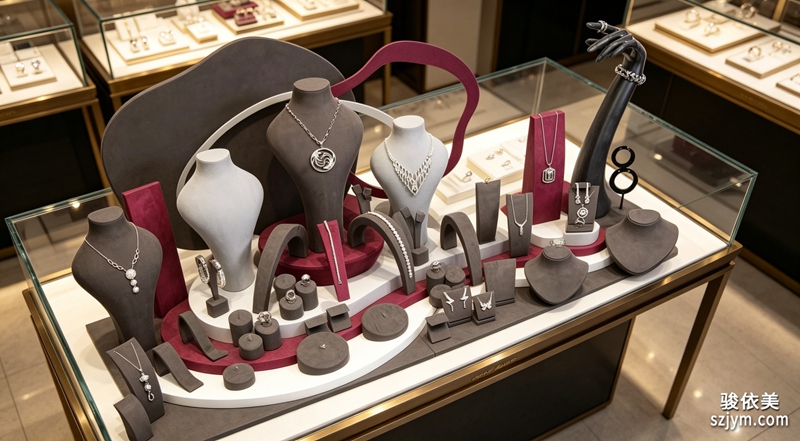
三种常见的"悬浮"结构
悬浮式的透明陈列,核心是让支撑点尽量少、尽量细。第一种是立柱式:戒指插在透明小柱上,吊坠挂在透明立钩上,柱径通常只有几毫米,与货品大小保持约一比十的比例,柱子细到像一条线,货品就成了视线的全部。第二种是卧式架:项链、手链平放在两条透明托条上,两端支起、中间悬空,链身自然下垂,比平铺在绒布上更有立体感,也方便顾客看清整条链的走向。第三种是悬垂式:用透明细线或细亚克力棒从柜顶或支架顶部吊挂货品,链坠、耳饰、胸针都可以挂起来,顾客绕柜一圈都能看到,特别适合展柜中央或橱窗的焦点位。
光与背景,决定"悬浮感"成不成立
透明支架本身没有颜色,悬浮感完全靠光与背景塑造。背景要"压得住":深色或哑光的绒布底板能衬出透明件的轮廓,而白色亮底反而会让立柱和底板融成一片,货品失去支撑感;光线要从侧后方来,让透明件的边缘勾出一道细边,正面再补一盏柔光,避免把光源反射成刺眼的亮点;展柜底部加装灯带向上打光,透明托条会在光里"隐身",货品看起来真的像是飘着的。还有一条容易被忽略:悬浮高度要与顾客视线平齐或略低,吊挂的货品不宜超过眼睛高度太多,否则顾客要仰着头看,精致的展示反而变成了负担。
清洁与安全:透明陈列的日常功课
补充一句选位:高客流门店的透明支架建议每隔一季轮换位置,既避免同一根细柱长期承受固定货品的重量,也让常客每次到店都有新鲜感。回到保养本身——亚克力怕刮、怕静电,护理要讲方法。日常清洁用柔软的干布或微湿的眼镜布单向轻擦,灰尘大时可以配合防静电喷剂,减少吸附;切忌用酒精、丙酮和粗糙的布料,亚克力表面会在几下摩擦里留下永久划痕,一旦花了,透明件就再也"隐形"不了。轻微划痕可以用细抛光膏顺纹打磨,但深度划伤只能更换配件,所以备用底座、托条建议随货多备几只。安全方面,高值货品上架时要在支架上加防滑垫或卡位,吊挂件要检查挂点是否牢固,防止顾客触碰或开关柜门震动时滑落;展柜内最好加一圈透明防护边,既挡灰尘,也避免货品滚落。透明陈列美在干净,也毁于随便——日常功课做到位,悬浮感才能天天在线。
透明不是没有陈列,而是把陈列让位给货品本身。一根细柱、两条托条、一根透明线,就能让戒指、吊坠和项链从柜面上"浮"起来,为门店换来更轻盈、更高级的观感。尚志优美居专注珠宝陈列设计与柜台道具,可提供亚克力支架、托盘、展柜、灯光等一站式配套,欢迎结合门店货品与柜型咨询定制。
原创声明:本文由尚志优美居(szjym.com)原创,欢迎转载,请注明出处。专业珠宝陈列道具,欢迎咨询:https://www.szjym.com
The most successful stand in a display cabinet is the one customers never notice. A ring standing on a slim column, a pendant hanging in mid-air, a necklace laid out along a transparent rail — seen from a distance, the piece seems to float in the light. That is the magic of transparent display. The material most often used to create this floating effect is acrylic: its transparency approaches glass, yet it can be easily cut, heat-bent and polished into ultra-thin columns, rails and hangers. It is lighter than metal stands and safer than glass, making it the number-one prop for a light, premium look in jewellery stores. Floating is not a gimmick — it frees the eye from the stand entirely, so customers look at the jewellery and nothing else.
Why Acrylic Works as an Invisible Stand
Acrylic owes its starring role in transparent display to the character of the material itself. With a light transmittance above 90 percent, light passes through the column almost without casting a shadow; the stand's outline dissolves into the background and the piece appears to hover in space. It is light and tough, so slim columns do not snap easily, and a piece is far easier to carry and arrange than glass of the same size. It is also highly workable — round tubes, square strips, shaped holders and heat-bent curves are all possible, with size and form made to follow the merchandise. Of course acrylic has weaknesses too: its surface is softer than glass and scratches easily, and static attracts dust so pieces look dirty within days. Using acrylic means treating transparency as daily homework — wiping and maintaining it carefully. That is exactly the threshold that makes transparent display look premium.
Three Common Floating Structures
The core of a floating transparent display is to keep support points as few and thin as possible. The first is the column type: a ring sits on a transparent post or a pendant hangs on a transparent hook, with the post only a few millimetres thick — roughly a one-to-ten ratio to the piece size — so thin it looks like a line, and the jewellery becomes the whole picture. The second is the horizontal rail: necklaces and bracelets rest on two transparent rails, supported at both ends with the middle suspended, so the chain drapes naturally with more depth than flat velvet and customers can see the whole run of the chain. The third is the suspended type: fine transparent threads or thin acrylic rods hang merchandise from the cabinet top or stand top. Pendants, earrings and brooches can all be hung this way, visible from every angle as customers walk around — ideal for the centre of a display cabinet or a showcase focal point.
Light and Background Make the Float Real
A transparent stand has no colour of its own; the floating effect is created entirely by light and background. The background must hold its own: a dark or matte velvet base brings out the outline of the transparent piece, while a bright white base blends column and board into one and the piece loses its sense of support. Light should come from the rear sides so the edges of the transparent piece catch a fine outline, with a soft fill light from the front to avoid reflecting the source into a glaring spot. Add LED strips at the base of the cabinet shining upward, and the transparent rails will vanish into the light, making the jewellery look genuinely suspended. One more point is easy to miss: the floating height should be level with the customer's eyes or slightly below — hung pieces should not sit too far above eye level, or customers crane their necks and a refined display turns into a burden.
Cleaning and Safety: Daily Routine for Transparent Display
Acrylic fears scratches and static, so care requires method. For daily cleaning use a soft dry cloth or a slightly damp spectacle cloth, wiping in one direction; in dusty conditions use an anti-static spray to reduce attraction. Never use alcohol, acetone or rough fabric — a few rubs will leave permanent scratches on the acrylic surface, and once dulled, a transparent piece can never be invisible again. Light scratches can be polished out along the grain with fine polishing paste, but deep damage means replacing the part, so it is wise to keep spare bases and rails with the order. For safety, add non-slip pads or clips when placing high-value pieces, and check that hanging points are secure so items do not slip off from customer touch or cabinet-door vibration; a transparent guard rim inside the cabinet is also recommended, keeping out dust and stopping pieces from rolling off. Transparent display is beautiful when clean and ruined by carelessness — keep up the daily routine and the floating effect stays on every day.
Transparent does not mean no display; it means the display gives way to the jewellery itself. A slim column, two rails and one transparent thread can lift rings, pendants and necklaces off the counter surface and win the store a lighter, more premium look. Shangzhi Youmeiju specialises in jewellery display design and counter props, offering acrylic stands, trays, cabinets and lighting as one-stop solutions, and welcomes consultations based on your merchandise and cabinet layouts.
Original article by Shangzhi Youmeiju (szjym.com). Reprints welcome; please credit the source. Professional display props: https://www.szjym.com


