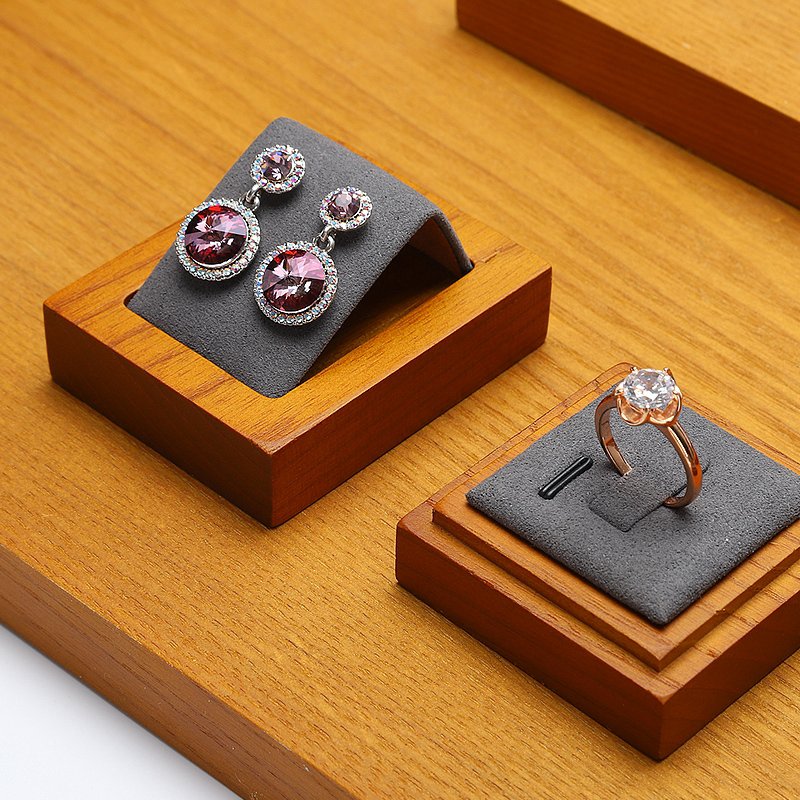
Earrings, rings and pendants are among the hardest objects to display in a jewelry counter. The goods are too small; standing alone they look thin, piled together they look messy. The key to solving small-item display lies in dedicated container props — trays, grid boxes, columns and card stands — that turn small goods into orderly visual language.
The ring tray is the most frequently used container prop. The depth, spacing and velvet color of the slots directly decide how rings appear. Slots too deep swallow the shank; too shallow make rings fall easily. Spacing too tight looks crowded; too loose wastes counter space. A good ring tray gives every slot a comfortable visual interval so the customer eye can be guided ring by ring.
Earring display containers deserve more thought. Independent earring card stands tilt goods up diagonally so customers can see the curve of the ear pin and the details of the back without taking them out. Multi-grid earring boxes suit batch display, with dividers between grids to prevent pins from tangling. For designer earrings, column stands let goods float in space, fully visible from any angle.
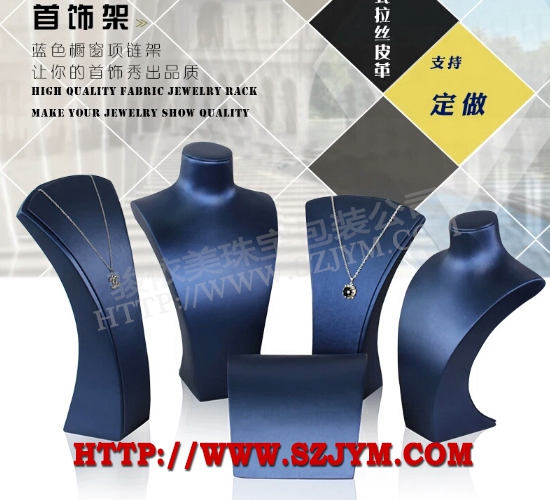
The container choice for pendants and small charms often relies on necklace stands or vertical stands. When a pendant is displayed alone, choose a stand with hooks; the goods hang vertically, and the natural drape lets customers see the wearing effect directly. If the pendant comes with a chain, the chain should be coiled or laid flat to avoid tangling. Container material should match the goods temperament: matte metal stands for silver, transparent acrylic stands for colored gems.
The inner color of small-item containers is a hidden display detail. Black velvet containers look deep and precious, suit gold and diamonds; white velvet looks fresh and transparent, suits colored gems and pearls; beige and gray velvet give a neutral feel, suit silver and platinum. The lining color should echo the overall tone of the counter to keep visual unity and avoid every container becoming its own island.
Anti-loss and anti-theft are unavoidable functional needs in container design. Earrings and rings are small and frequently handled; tray slots should give moderate grip so goods are easy to take out but not likely to slip off. Containers should sit within close range of the glass shield, and high-value small items should have independent small safe drawers. Containers that balance beauty and safety are truly qualified props.
Cleaning and maintenance of small containers deserve equal attention. Velvet surfaces collect dust easily and need regular brushing with soft brushes and vacuum tools; acrylic surfaces scratch easily and should be wiped with microfiber cloths. When aging trays collapse in nap and wear at edges, replace them promptly, because the first impression of a small item often comes from the tray that carries it.
Container selection should also consider the frequency of product renewal. Counters with frequent changes suit universal trays with standardized slots, replacing only the goods, not the trays; counters focusing on classics can order dedicated containers with one-to-one slots for higher display efficiency. Binding container selection to product strategy avoids wear from constant replacement.
Small containers of different materials should be managed in zones. Velvet containers are grouped by color family, acrylic containers classified by shape and size, and taken quickly by counter style when needed. Container storeroom organization seems trivial but decides the efficiency and ease of designers at the counter. Do an inventory and cleaning every quarter, register worn pieces for retirement, and keep the pool healthy.
The labeling system of small containers is worth mentioning. Stick product numbers and inventory dates on the back or bottom of trays so goods are quickly reconciled when entering and leaving the counter, reducing omissions in small-item inventory. Particularly precious goods correspond to fixed tray numbers, forming one-piece-one-tray management. Containers do more than display; they participate in inventory management, and multi-use is the value extension of props.
For children and family customers, small-item display needs more window details. Locked mini display boxes suit reachable heights so parents can view goods closely; open earring grids should avoid lower cabinet corners to prevent children reaching. Container safety matters especially before family customers — thoughtfulness often converts into repurchase and word-of-mouth.
The final advice on selecting small containers is "look at the goods first, then choose containers". When each new batch arrives, evaluate the size, temperament and quantity before deciding which tray, card stand or column to use. Containers serve the goods; goods do not accommodate containers. Following this order keeps small-item display on the right track.
Small goods may be small, but their containers should never be sloppy. A refined tray holds up not only a ring or a pair of earrings, but the craftsmanship and brand attitude the goods represent. The way of containers is precisely the display philosophy of seeing the big in the small.