周末和节假日,是珠宝柜台压力最大的时候。平时一位销售对着一两位客人,从容不迫;周末午后的柜台前却可能同时围着五六位客人,试戴、询问、结账挤在一起。人一多,陈列的弱点全被放大:托盘里的戒指被翻得东倒西歪,项链挂架被拨得缠成一团,贵重货品随手放在柜面上没人看管。高峰能不能撑住,不是靠当天手忙脚乱地补救,而是靠平时把陈列和动线设计到位。人多时的柜台陈列,核心就两件事:让顾客看得顺、拿得稳,让销售管得住、查得清。
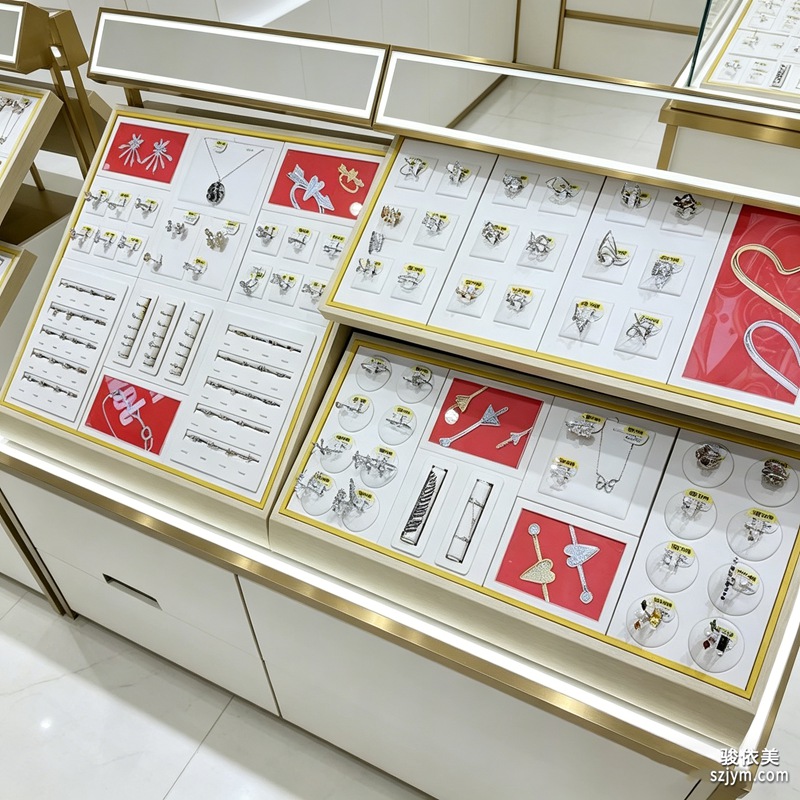
先调度线,让人流不“打架”。柜台前同时站几位客人,最先出问题的是空间分配。陈列时把柜台按功能分区:试戴区、选购区、结账区各占一段,明显拉开距离。热销款和主推款放在柜台中段,方便销售站在中位同时照顾左右两侧的客人;高价值、需要讲解的货品放在柜台内侧或需要销售取放的区域,避免客人自取;冲动型小件放在靠近收银和柜角的位置,顺手就能拿。高峰时段,柜台台面只保留必要的道具,多余的托盘、立牌先收到抽屉或柜下,台面越空,客人越不容易混淆,销售的动作也越干净。
再看陈列密度:人多时,柜台的货反而要“少而稳”。陈列密度过高,客人多翻几次就乱成一团,销售补位都来不及。高峰前按“可快速复原”的标准重摆一遍:托盘内的货品件数控制在销售熟记的范围内,每格一件或两件同类货,顾客翻乱后闭店前能按记忆复原;戒指托、项链架选择带卡位或挂钩的款式,货品放上去有明确的位置感,取走一件缺口一眼可见;展示件之间的间距拉大一点,给顾客的手留出余地,手肘不容易碰到相邻道具。把“一眼管理”做到位:哪个格子被拿走了货,销售扫一眼柜台就能发现,补货和防盗都有了抓手。
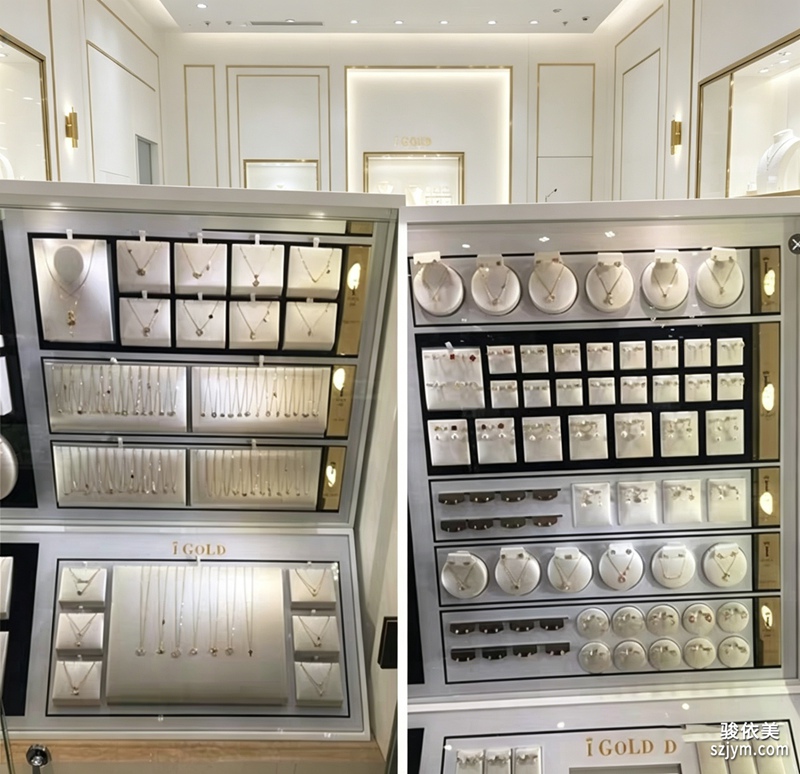
试戴区是高峰的“咽喉”,要专门管理。试戴台是最容易乱、也最值得投入防滑与固定的区域:试戴托盘用绒面防滑托,戒指托与项链钩固定不动,客人试完放到指定盘格,销售回收后原位放回。高峰时约定一个节奏:客人试戴一只,销售收走一只,及时归位一只,托盘里始终只有正在试的货。多组客人同时试戴时,用不同颜色的试戴盘区分货品归属,避免几批货混在一起。试戴区要配一面好镜子、一盏够亮且正对脸部的灯,让客人看得清楚,减少反复摘下戴上的次数,试戴效率高了,柜台前排队的人就少了。
安全和防损,高峰时更要心里有数。贵重货品(高克拉钻石、大件金饰、孤品)不要陈列在客人可直接触碰的边缘位置,尽量放在柜内或需要销售取送的区域;柜台内的高价值货品,高峰时段增加点名频次,销售交接班时当面清点;人多的柜台,小件货品最容易顺手流失,货品数量少的格子用站牌或卡位固定位置,一旦异常立刻发现。玻璃柜台内的陈列猛烈晃动时要及时提醒客人轻拿轻放;遇到特别拥挤的时段,柜门只开销售一侧,双开门柜台只开靠里的那一扇,从物理上减少误碰和顺手拿取的机会。
闭店清点是高峰的收尾,也是第二天从容的开始。闭店后按固定顺序收口:先清点贵重货品并锁入保险柜,再逐格清点托盘货品数量,与晨间点货记录核对,差异当场追查;然后归位所有道具,把位移的托盘、立牌恢复原位,把试戴区的绒布扫净、镜面擦亮;最后记录当天的高峰数据:哪个时段人最多、哪几款被反复试戴、哪个区域最容易乱,写进交接本,第二天陈列和人力安排直接据此调整。把每一次高峰都变成数据,柜台会越撑越稳。
高峰是对柜台的检验,也是给它升级的机会。人流教会柜台哪些位置会被够到、哪些道具不够稳、哪些货品最受欢迎;把高峰时暴露的问题逐个解决,平时的陈列自然更从容。人再多,柜台也能撑得住,靠的不是运气,而是一套随时能复原、随时能清点的秩序。
Weekends and holidays put the heaviest pressure on a jewelry counter. On a normal day one salesperson faces one or two customers at a leisurely pace, but on a weekend afternoon five or six people may crowd the counter at once, with try-ons, questions and payments squeezed together. When people pile up, every weakness in the display is magnified: rings in the tray are turned every which way, necklaces on the rack tangle into knots, and high-value pieces are left unattended on the countertop. Whether the rush holds up is not decided by hurried patchwork on the day itself, but by how the display and the traffic flow are designed in advance. When the counter is crowded, the display comes down to two things: let customers see clearly and pick up steadily, and let the sales team manage and count everything easily.
First, manage the flow so people do not collide. When several customers stand at the counter at once, space allocation is the first thing to suffer. Divide the counter by function during display: a try-on zone, a browsing zone and a payment zone, each taking its own section with clear distance between them. Best sellers and hero items go to the middle of the counter, so the salesperson can stand at the center and serve both sides at once. High-value pieces that need explanation are placed toward the inner side or in areas where the salesperson retrieves them, keeping customers from helping themselves. Impulse items go near the cash register and the corners of the counter, within easy reach. In peak hours, keep only essential props on the countertop and put extra trays and sign holders away in drawers or under the counter. The emptier the top, the less customers mix things up and the cleaner the salesperson's movements.
Next, density: when it is crowded, the counter should hold fewer pieces, arranged more steadily. Overpacked displays fall into chaos after customers browse a few times, and restocking cannot keep up. Before peak hours, reset the counter to a standard that is quick to restore: keep the number of pieces in each tray within a range the sales team can memorize, one or two items of the same kind per cell, so a messy counter can be put back from memory before closing. Choose ring stands and necklace racks with slots or hooks, so each piece has a clear home and a missing item shows as an obvious gap. Widen the spacing between display pieces to leave room for customers' hands, so elbows do not knock neighboring props. Nail the one-glance management: when a cell has been emptied, the salesperson spots it in a single sweep, giving both restocking and theft prevention a firm handle.
The try-on zone is the throat of peak hours and needs dedicated management. The try-on table is the easiest place to become messy and the most worth investing in anti-slip and fixing: use a velvet tray with a non-slip base, keep ring stands and necklace hooks fixed, and have customers place finished pieces in a designated cell, with the salesperson returning them to their home positions. Set a rhythm in peak hours: one piece tried on, one collected, one put back, so the tray always holds only what is currently being tried. When several customers try on at once, use trays of different colors to mark which goods belong to which customer, keeping batches from mixing. The try-on zone needs a good mirror and a light that is bright enough and faces the face directly, so customers see clearly and take pieces on and off fewer times. When try-ons go faster, the queue at the counter shortens.
Safety and loss prevention need extra attention in peak hours. High-value pieces (high-carat diamonds, large gold items, one-of-a-kind pieces) should not be displayed at edges customers can touch directly; keep them inside the cabinet or in areas where the salesperson retrieves them. During peak periods, increase the frequency of counting high-value items in the counter, and take a face-to-face inventory at shift handover. On a crowded counter, small items are the easiest to walk away with: use sign holders or slots to fix the position of cells with few items, so any anomaly is noticed at once. If displays in the glass case shake violently, remind customers to handle them gently. In especially crowded periods, open only the salesperson side of the cabinet; for double-door counters, open only the inner door, reducing both accidental bumps and easy grab-and-go at the physical level.
Closing inventory is the ending of the peak and the beginning of the next calm day. After closing, wrap up in a fixed order: first count and lock the high-value pieces into the safe, then count the pieces in every tray cell and compare with the morning count, chasing any difference immediately. Next, restore all props: put shifted trays and sign holders back, brush the try-on velvet clean and wipe the mirror. Finally, record the peak data of the day: which period had the most people, which pieces were tried on repeatedly, which area got messy most easily. Write it into the handover book, and adjust the next day's display and staffing accordingly. Turn every peak into data, and the counter will hold up on its own.
A peak is a test of the counter and also a chance to upgrade it. The crowd teaches the counter which positions get reached, which props are not stable enough, and which goods are the most popular. Solve the problems exposed in each peak one by one, and daily display becomes more composed by itself. No matter how many people come, the counter can hold up, not by luck but by a system that can be restored and counted at any moment.


