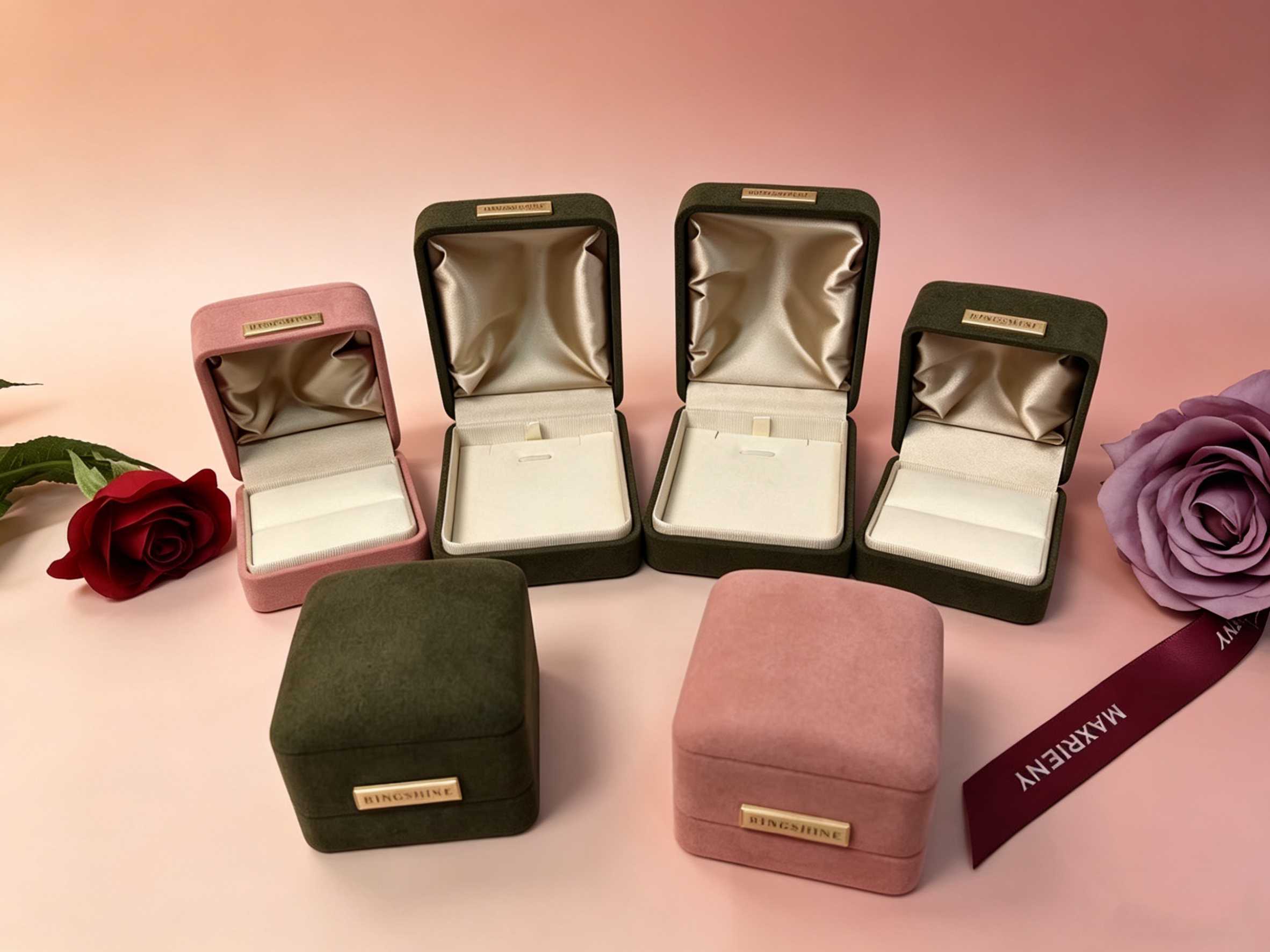
进入2026年,珠宝包装的评价标准正在悄悄改变。过去客户挑盒子,常常先看厚度、看重量、看有没有厚实的绒布内托;如今越来越多品牌在询价时,第一句话问的却是材质是否环保、能否回收、整柜运输能减重多少。骏依美包装在服务国内外珠宝品牌的过程中明显感到,可持续与轻量化已经从加分项变成了必答题,并且正在重塑首饰盒设计与珠宝包装设计的底层逻辑。
环保材质的落地,首先体现在纸质结构件对塑料件的替代。传统首饰盒常用注塑内托加海绵、再包一层绒布,拆解回收几乎不可能;新一代方案改用模压纸浆内托、蜂窝纸缓冲和单一材质卡纸外壳,整只盒子可以进入同一条回收线。表面处理也在做减法,减少覆膜与烫金面积,改用水性油墨、压凹与本白纸纹理来体现质感。对珠宝盒工厂而言,这意味着模具、糊盒工艺与品检标准都要同步升级,过去靠厚度掩盖的工艺瑕疵,现在会被更薄的结构直接放大出来。
再生材质的使用比例,是近两年招标文件里越来越常见的硬指标。再生卡纸、再生绒布、以水性胶替代溶剂胶,都是可以量化写进合同的条款。皮质部分则更多转向再生皮与植鞣工艺,或者干脆用高密度纤维织物替代,既避免动物皮革带来的争议,也让首饰盒批发环节的成本更可控。需要提醒的是,环保不等于降级,内衬的手感、开合的阻尼与盒盖的贴合度,仍然是消费者第一时间感知到的品质信号,任何以环保为名的粗糙感都会被立刻识破。

轻量化不是简单地把材料削薄,而是用结构去换重量。常见做法有三种:一是把实心木盒改为薄壁夹层结构,用加强筋替代整体加厚;二是把厚海绵内托改为折纸式插槽,靠折痕的抗压性固定戒指与耳饰;三是把磁吸件从大面积铁片改为小尺寸嵌钉。经过重新设计的饰品包装盒,单只重量往往能下降三到四成,而在结构计算得当的前提下,跌落测试成绩并不会变差。
重量下降带来的收益,会在整条链路上放大。一只首饰盒减重五十克,一个四十尺柜就可能多装数千只,海运与空运成本随之下降;门店补货、电商发货的分拣负担也在减轻。更实际的是,轻量化通常伴随着盒型的规整化,堆叠更稳定、破损率更低,退货换货带来的隐性损耗同样会减少。这些可以算清楚的数字,往往比一句环保口号更能说服采购与财务部门。
当所有品牌都在用环保纸盒,差异化就必须回到设计本身。骏依美在珠宝包装设计上更强调三个抓手:结构记忆点、开启仪式感与可延续使用。结构记忆点可以是一个非对称的翻盖角度、一条抽拉丝带,也可以是盒身与珠宝摆台共用的模块化卡槽。开启仪式感靠阻尼与声音塑造,避免廉价的脆响。可延续使用则是让盒子在收纳之后仍有用处,比如翻转变成桌面小首饰台,让包装从一次性成本变成长期的品牌触点。
与盒子同步进化的,还有首饰袋。绒布袋正在被有机棉、再生涤纶与洗水牛皮纸袋分流,抽绳改用棉绳而非涤纶包芯绳,方便整体回收。珠宝袋加工的难点在于小批量与多色号,骏依美的做法是把版型标准化、把颜色做成固定色卡库,让品牌在保持视觉统一的前提下快速上新。对轻量化而言,一只克重合适的袋子甚至可以替代部分外盒,用于日常款与线上促销装。
门店端同样在轻量化。传统珠宝陈列道具偏爱实木与金属,搬运不便、改陈成本高;如今更流行铝型材骨架加可换面料的组合式珠宝摆台,换季只换面布与铭牌。可持续的思路在这里体现为少扔:道具做成可拆卸模块,坏了换件而不是整套报废。这类设计对珠宝盒工厂的要求是必须具备结构件与软包一体化的生产能力,否则道具与包装的颜色、绒面手感很容易对不上。

对准备启动珠宝盒定制的品牌,建议把可持续要求前置到打样阶段。先明确单只目标重量、可回收比例与预算区间,再谈外观;打样时同步做跌落、堆码与高低温测试,避免量产后返工。起订量方面,纸质结构件通常比木质与皮质更灵活,适合首饰盒批发试单。工期上,环保材质的备料周期可能更长,建议在旺季前预留充足时间,避免因为一款认证纸材缺货而拖住整个上市节奏。
归根结底,2026年的珠宝包装竞争,比的不是谁的盒子更重、更贵,而是谁能用更少的材料,讲清楚品牌想说的故事。轻量化解决成本与体验,可持续解决品牌的长期信任,二者叠加,才是首饰盒设计真正的价值所在。
本文为原创内容,版权归骏依美所有。如需转载请注明出处。
In 2026, jewelry packaging is being judged by a new set of rules. For years, buyers equated weight with luxury: the thicker the board, the denser the foam, the more premium the box was assumed to feel. That assumption is fading fast. At Junyimei Packaging, we now receive briefs that open with questions about recycled content, material traceability and shipping weight per container, long before anyone mentions color or logo placement. Sustainability and lightweighting have moved from optional talking points into mandatory requirements, and together they are quietly rewriting the fundamentals of jewelry packaging design for brands of every size.
The first visible change is structural. A traditional jewelry box usually combines an injection molded tray, a slab of foam and a velvet wrap, glued into a single unit that no recycling line can separate. The new generation replaces that stack with molded pulp trays, honeycomb cushioning and a mono material board shell, so the whole box can travel down one recovery stream. Surface treatment is also being simplified: less lamination, smaller foil areas, water based inks and debossing instead of thick coatings. For a jewelry box factory, this means new tooling, new gluing lines and updated inspection standards.
Recycled content is increasingly written into contracts as a measurable number rather than a vague promise. Recycled board, recycled velvet and water based adhesives replacing solvent glues can all be specified, audited and reported. Leather components are shifting toward recycled or vegetable tanned options, or being replaced entirely by high density woven textiles that avoid animal origin debates while keeping wholesale jewelry box costs predictable. One caution matters here: sustainable must never mean downgraded. The feel of the lining, the damping of the hinge and the fit of the lid remain the first quality signals a customer perceives.

Lightweighting is not simply thinning down materials; it is trading mass for smarter structure. Three approaches dominate today. First, solid wood cases become thin wall sandwich builds with internal ribs instead of uniform thickness. Second, thick foam inserts give way to folded paper slots whose creases hold rings and earrings under tension. Third, large steel magnet plates shrink into small embedded pins. A redesigned jewelry gift box often loses thirty to forty percent of its weight, and when the structure is calculated properly, drop test performance does not decline at all.
Savings from reduced weight multiply along the whole supply chain. Removing fifty grams from a single jewelry box can add thousands of units to a forty foot container, cutting sea and air freight proportionally. Store replenishment and online order picking become less strenuous, and lighter cartons reduce handling fatigue. Just as importantly, lightweighting usually pushes designers toward regular, stackable geometries, which lowers crushing damage and the hidden cost of returns and replacements. These numbers persuade procurement and finance teams far more effectively than a sustainability slogan printed on a brochure.
When every brand ships a recycled paper box, differentiation must return to design itself. Junyimei focuses on three levers in jewelry packaging design: a structural signature, an opening ritual and a second life. A structural signature might be an asymmetric lid angle, a pull ribbon, or a modular slot shared between the box and the matching jewelry display stand. The opening ritual is engineered through damping and sound, avoiding the cheap plastic snap. A second life means the box remains useful after unboxing, for example folding out into a small desktop jewelry tray.
Jewelry pouches are evolving alongside rigid boxes. Velvet is losing ground to organic cotton, recycled polyester and washed kraft paper, with cotton drawstrings replacing polyester cords so the entire pouch stays recyclable. The real challenge in jewelry pouch manufacturing is small batches across many colorways; our answer is to standardize patterns and maintain a permanent color library, letting brands launch new products quickly without breaking visual consistency. From a weight perspective, a well specified pouch can even replace an outer box for everyday styles and online promotions.
Retail floors are getting lighter too. Classic jewelry display props favored solid timber and heavy metal, which made re merchandising slow and expensive. The current preference is aluminum profile frames with interchangeable fabric panels, so a seasonal refresh only requires new covers and nameplates. Sustainability here translates into throwing away less: props are built as demountable modules, and a damaged part is swapped rather than the entire set scrapped. Producing this type of fixture requires a supplier that can handle both hard structures and soft upholstery inside one workshop.

For brands about to start a custom jewelry box project, bring sustainability requirements forward into the sampling stage. Define target unit weight, recycled percentage and budget band before discussing appearance. During sampling, run drop, stacking and temperature humidity tests in parallel so problems surface before mass production begins. Regarding minimum order quantities, paper based structures are usually more flexible than wood or leather, which makes them ideal for trial orders in jewelry box wholesale. Lead times deserve attention as well, because certified and recycled materials often require longer procurement windows than conventional stock.
Ultimately, the 2026 competition in jewelry packaging is not about whose box is heavier or more expensive. It is about who can tell a brand story convincingly with less material. Lightweighting solves cost and experience; sustainability builds long term trust. Combined, they define where the real value of jewelry box design now lies, and they will separate suppliers who merely print boxes from partners who engineer them.
This article is original content, copyright Junyimei. Please credit the source if republished.